RETURN ON INVESTMENT/BUSINESS LIFETIME VALUE
The ROI of Culture Is Larger Than Most Companies Know How to Measure
Brilliant Company Culture connects visible financial return with the deeper value of Employee Lifetime Value, Customer Lifetime Value, and Business Lifetime Value.
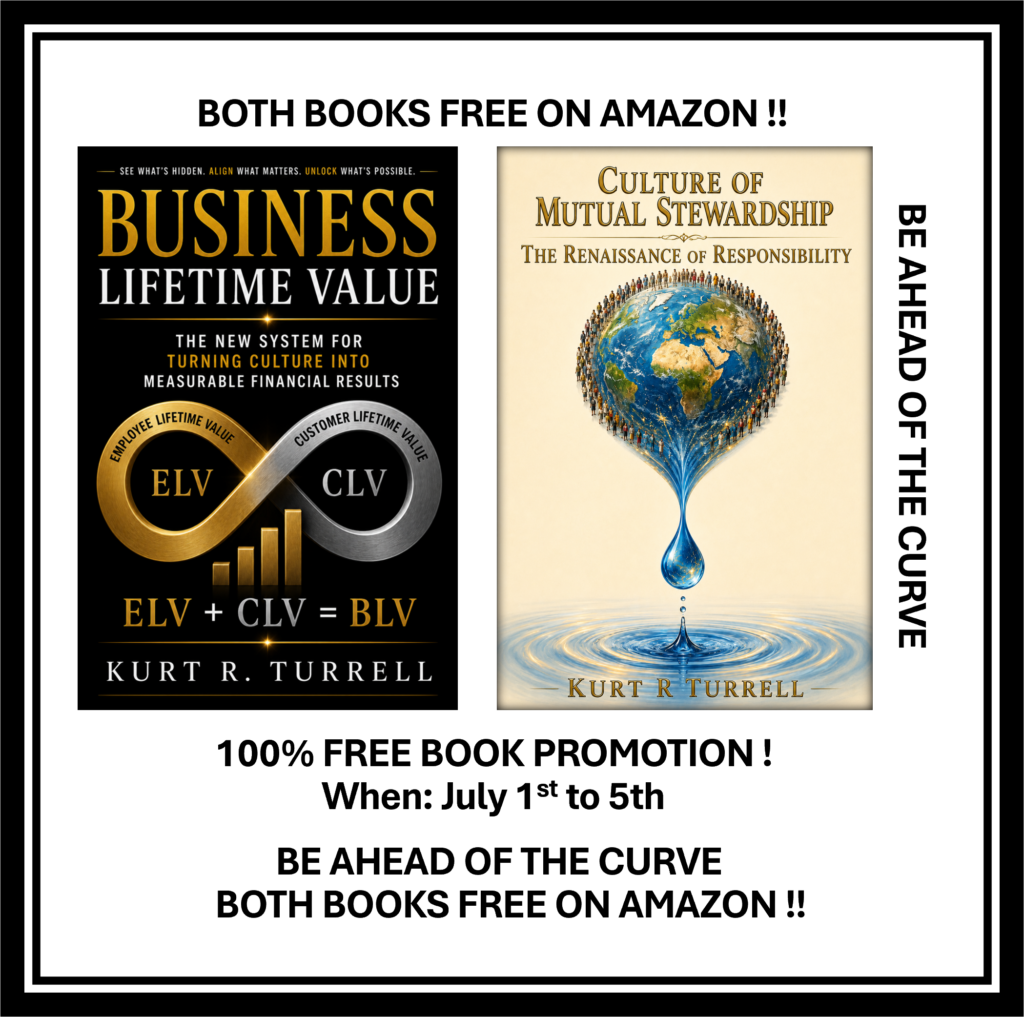
ELV + CLV = BLV
Employee Lifetime Value + Customer Lifetime Value = Business Lifetime Value
Your Company May Be Losing Value It Cannot Yet See
Most companies measure revenue, payroll, turnover, customer acquisition, productivity, and overhead. But many of the most expensive cultural losses begin before they appear on a financial statement.
They begin as missed ideas, preventable turnover, weak alignment, underused employee intelligence, customer friction, poor communication, and future risks that leadership does not see early enough.
That is Cultural Revenue Leakage.
The Visible ROI of the RGCC
The Revenue-Generating Culture Center is designed to help companies identify, reduce, and measure areas where culture directly affects financial performance.
Reduced Turnover
~ Lower recruiting, hiring, onboarding, and retraining costs.
Lower Overhead Waste
~ Employee-generated observations can reveal inefficiencies leadership may not see.
New Revenue Ideas
~ Employees often see unmet needs, missed opportunities, and customer-facing possibilities first.
Improved Retention
~ A stronger employee experience can preserve knowledge, continuity, and loyalty.
Better Customer Experience
~ Employee alignment strengthens the customer experience that protects CLV.
Improved Execution
~ Better cultural communication reduces friction, confusion, and repeated mistakes.
The Most Expensive Losses Are Often the Ones No One Measures
Some ROI is visible. Some is preventative. Some is discovered only after a company creates a system for listening, organizing, reviewing, and acting on internal intelligence.
Missed employee insight
Lost loyalty before resignation
Customer frustration before defection
Department friction before breakdown
Management blind spots
Unreported inefficiencies
Unrealized employee ideas
Future risks detected too late
ROI Measures Return. BLV Measures Long-Term Business Value.
Traditional ROI asks, “What did we spend, and what did we get back?”
Business Lifetime Value asks a deeper question:
How much long-term value can the company create, protect, recover, and compound by aligning its people, customers, culture, and internal intelligence?
ELV + CLV = BLV
Employee Lifetime Value is the long-term value of employee contribution, loyalty, insight, growth, knowledge, and alignment.
Customer Lifetime Value is the long-term value of customer trust, retention, repeat business, referrals, and relationship strength.
Business Lifetime Value is what happens when employee value and customer value strengthen each other over time.
The RGCC Turns Cultural Value Into a Repeatable System
The RGCC is not merely a culture idea. It is the architecture that helps a company continuously gather, organize, evaluate, and act on cultural intelligence.
Culture Facilitators
Surface employee goals, insights, concerns, revenue ideas, and cost-saving ideas.
Culture Coordinators
Organize, guide, quality-check, and elevate meaningful patterns.
Culture Think Tank
Reviews ideas, risks, opportunities, feasibility, and implementation potential.
Chief Culture Officer
Integrates RGCC intelligence with executive strategy, departments, and company objectives.
View the ROI / BLV Click-Through Presentation
This brief presentation explains how visible ROI, unseen ROI, Cultural Revenue Leakage, Employee Lifetime Value, Customer Lifetime Value, and Business Lifetime Value connect through the RGCC model.
What Can Be Measured?
Turnover reduction
Retention improvement
Revenue ideas submitted and implemented
Cost-saving ideas submitted and implemented
Employee participation and engagement trends
Customer experience indicators
Department friction patterns
Operational inefficiency reports
Risk warnings identified early
Implementation outcomes from Think Tank review
What Value Is Your Company Losing Because It Cannot Yet See It?
The purpose of the RGCC is not simply to improve morale. It is to help a company identify hidden value, reduce Cultural Revenue Leakage, strengthen Employee Lifetime Value, protect Customer Lifetime Value, and build Business Lifetime Value over time.